
Reviews
HIFIMAN HE1000 WiFi Headphone Review: When Streaming Feels Serious
HE1000 WiFi — Earphonia · earphonia.com (excerpt)
Earphonia · earphonia.com Original article
Excerpt — page 1 of the original review. The supplied archive includes the first page only. Use the Original article link above to continue reading.
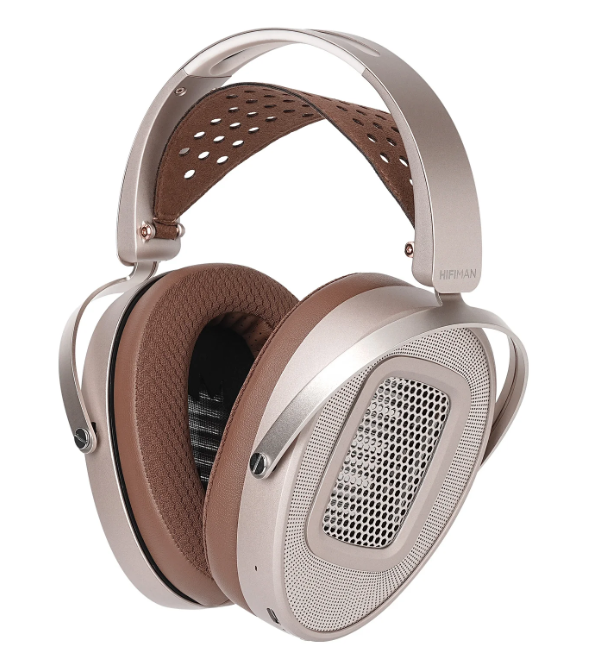
The longer I’ve owned the HE1000 WiFi Headphone, the less its wireless side feels like the story.
Which is odd, because that’s obviously the thing people notice first. A flagship open-back headphone that streams over Wi-Fi is not exactly a subtle product concept. Early on, most conversations drift toward architecture, bandwidth, streaming protocols, and whatever else people have read in spec sheets..
earphonia.com HE1000 WiFi Headphone Review
£2609
9.0
Sound Signature
9.3/10
Build Quality
8.5/10
Value
8.2/10
After a while, though, those discussions stop feeling very important.
Most evenings look pretty much the same. I finish work, sit down, open Qobuz or Apple Music, and start wandering. Sometimes it’s an album I’ve played for a decade. Sometimes it’s something I found twenty minutes earlier and probably won’t revisit. The HE1000 WiFi Headphone has gradually become the thing I pick up when I don’t want to think about the process very much.
That’s probably where the Wi-Fi implementation succeeds.
A lot of wireless headphones still feel attached to something else. A phone. A tablet. A laptop. The HE1000 WiFi Headphone behaves differently. Once it’s on the network, it feels less like an accessory and more like a complete playback chain that happens to sit on your head.

And before you even play anything, that care is right there.
Built-in streaming, its own DAC stage, dedicated amplification—those aren’t new ideas individually, but together they create a listening experience that feels closer to using a self-contained hi-fi system than pairing a typical wireless headphone.
None of that would matter if the sound wasn’t any good, obviously.
The first thing that struck me was the overall balance.
Actually, that’s not quite true.
The first thing I noticed was how little it seemed interested in impressing me.
There’s still a recognisable Hifiman character here, at least to my ears, but it doesn’t lean forward quite as aggressively as some earlier models I’ve spent time with.
It has presence, but it doesn’t peacock.
Open, highly resolving, spacious—yes. Yet there’s a settled quality to it that took me a few days to appreciate.
Not relaxed in the sense of being soft. Just… less eager to prove a point.
A lot of highly detailed headphones make their case immediately. They throw information at you. Tiny details. Room cues. Recording artifacts. Sometimes that’s impressive for fifteen minutes and tiring three hours later.

The HE1000 WiFi Headphone retrieves plenty of information. It just doesn’t seem especially interested in underlining every last bit of it.
That becomes more noticeable over longer sessions.
One evening I put on a Bill Evans record intending to listen to a couple of tracks before bed, drifted into Brad Mehldau, then completely lost track of time.
Three hours passed. Maybe more.
At some point I remember looking at the clock and wondering why I was suddenly hungry.
Which sounds ridiculous written down, but that’s roughly when I realised the HE1000 WiFi Headphone was doing something right.
The planar driver has a lot to do with that.
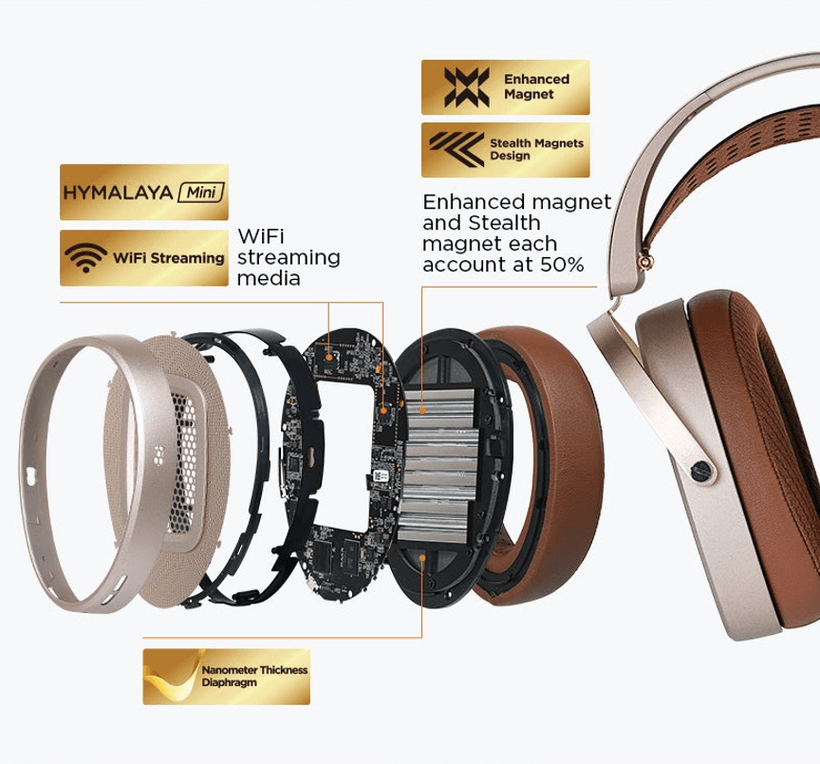
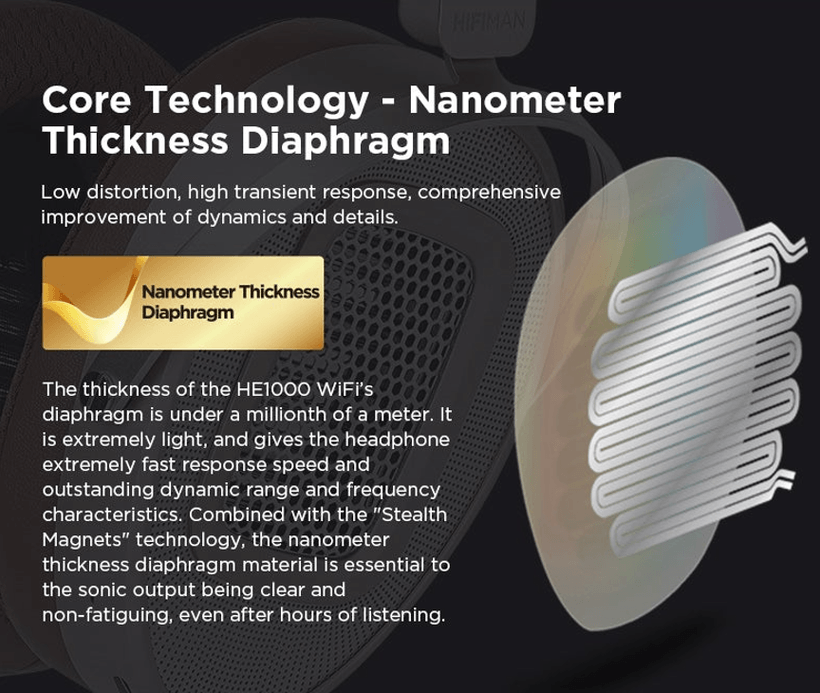
Transient response is one of those things reviewers mention endlessly because, well, it matters when it’s done right. The nanometer-thickness diaphragm reacts very quickly. Piano notes emerge cleanly. Snare hits have a clear leading edge. Small dynamic movements are easier to follow than they are on slower drivers.
Still, what I ended up appreciating wasn’t the speed itself.
It was the restraint.
Some headphones create a sense of detail by exaggerating attacks. Everything gets a hard outline around it.
It’s a bit like taking an old photograph and winding the sharpness control too far. Every edge becomes more obvious. Every texture stands out.
Impressive at first.
Then slightly artificial.
Then impossible to ignore.
That isn’t really happening here. The HE1000 WiFi Headphone is quick, but it leaves room for decay.
String quartets make this obvious. You hear the bow contact. You also hear what happens afterward—the body of the instrument resonating, harmonics hanging in the air, notes overlapping slightly inside the recording space. Those lingering textures matter just as much as the initial attack. Actually, maybe more. Timbre benefits from that approach.
It’s often the area where technically impressive headphones stumble a little. Resolution is easy to notice. Natural tone is harder to pull off. The HE1000 WiFi Headphone generally avoids drawing attention to any one frequency region, which helps. Vocals sound believable.
I know that’s one of those reviewer words that can mean almost anything, but I kept coming back to it anyway. Believable. I kept coming back to that word. Not lush. Not especially warm. Not pushed forward. Just convincing enough that I stopped thinking about them.
Maybe that’s faint praise on paper. In practice it’s surprisingly rare. There is one caveat, though.

The bass carries a bit more substance than some long-time Hifiman listeners might expect. On most recordings I liked the change. Bass guitars have greater presence. Kick drums feel more grounded. Electronic music benefits from the extra weight underneath everything else. Occasionally, however, that added mid-bass energy can make dense mixes sound slightly thicker than ideal. I noticed it now and then with layered vocal arrangements where the lower mids became a touch richer than I would have preferred. Not a major issue. Just something I kept noticing.
The bass itself remains extremely well controlled.
There’s a persistent assumption that planar headphones are all texture and not much impact. Like a lot of audiophile folklore, there’s usually a grain of truth buried somewhere underneath years of repetition.
The HE1000 WiFi Headphone handles both better than expected. Extension is strong, but more importantly the low end stays organized. Modern electronic recordings can get messy in a hurry when multiple bass layers start stacking on top of each other. Here they remain distinct. You can follow individual elements without the presentation turning clinical. The headphone seems more interested in shape than sheer force.
Acoustic bass recordings illustrate that nicely. You’re hearing the note develop, resonate, and fade rather than simply receiving a dose of low-frequency energy.
The spatial presentation is probably the feature that keeps pulling me back. Not because it’s the biggest stage I’ve heard. If anything, I’ve heard wider. Not because it’s enormous. Plenty of large planar headphones sound enormous. What matters is that the space feels coherent. I’ve heard headphones that generate impressive width by stretching everything outward until the image feels disconnected.
Almost as if somebody grabbed the recording with both hands and pulled it apart. Others create depth but lose positional certainty. The HE1000 WiFi Headphone lands somewhere in the middle and generally sounds more believable because of it. Imaging is particularly good. With orchestral recordings, sections remain stable as arrangements become more complex. Woodwinds, strings, brass—everything occupies its own place without feeling artificially separated.
You hear little things because the driver keeps the picture still, not because the treble has been jacked up to fake insight.
The same thing happens with dense progressive rock recordings where dozens of elements compete for attention. Nothing collapses. Nothing gets spotlighted unnecessarily, either. I don’t really listen to music to admire separation as a standalone achievement. Separation is useful because it preserves relationships between instruments. That’s a different thing. I don’t find myself listening to it and thinking about imaging. Which is probably the strongest compliment I can give its imaging.
Dynamics deserve mention as well, especially the smaller ones.
Microdynamic shifts are easy to overlook because they’re not dramatic. Yet they contribute enormously to realism. A slight change in touch. A subtle increase in intensity. Tiny fluctuations that communicate intent more than volume. Those come through very naturally here. The integrated amplification appears well matched to the driver. Quiet passages don’t feel flattened. Larger swings arrive without strain. At no point did the system give the impression that it was running out of headroom.
The built-in HYMALAYA R2R DAC was something I approached with a bit of skepticism at first. DAC discussions can become weirdly ideological. Give a group of audiophiles long enough and somebody will eventually start talking about resistor ladders as if they’ve discovered a lost branch of philosophy. After enough listening, though, I stopped worrying about whether any particular characteristic came from the R2R architecture itself or from the broader implementation. Separating those factors isn’t really possible in a product like this anyway.

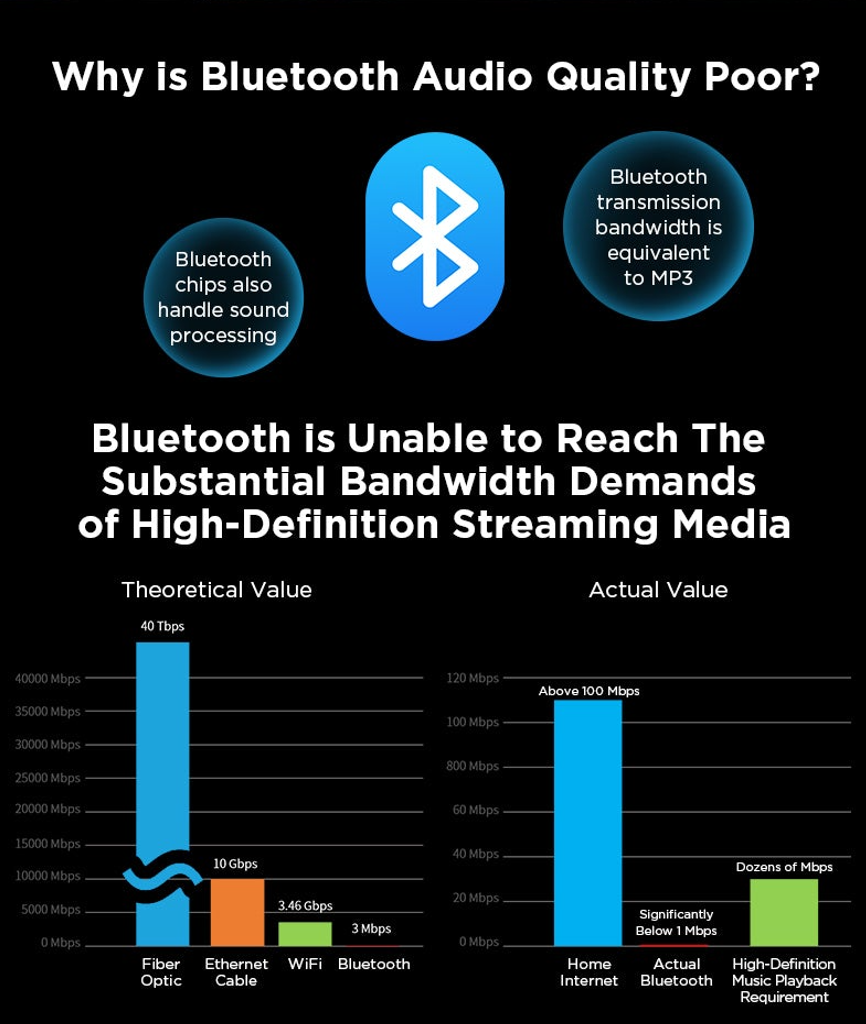
What matters is that the system feels cohesive. The signal path never calls attention to itself. There’s no obvious digital glare. No artificial sheen sitting over everything. Just a sense that all the pieces are working together. Everything seems to work toward the same goal. That sounds vague written down, but it’s noticeable in practice. Bluetooth mode is better than I expected, too. The headphone retains much of its character because the internal DAC and amplifier remain central to the experience. You’re not hearing a completely different product.

Still, switching back to Wi-Fi makes the priorities clear. Complex material breathes a little more easily. Fine textures become slightly more apparent.
The difference isn’t night-and-day, despite what marketing departments would probably like you to believe. But it’s there. Living with the HE1000 WiFi Headphone isn’t entirely frictionless. Battery life in Wi-Fi mode is naturally shorter than Bluetooth operation. Most of the time that isn’t an issue for me, although a few longer weekends did involve an unexpected trip to the charger. Network behavior is generally solid, though simpler setups tend to be less eventful. My router never gave it much trouble. Someone else’s experience might vary a bit depending on how complicated their home network is.
And then there’s the open-back design. Nothing clever changes the fundamentals. Sound leaks out. Outside noise gets in. These are home-listening headphones. That’s really the end of the discussion. For some people that will be a dealbreaker. For me it’s part of the reason the product exists at all. Comfort ended up being better than the specifications suggest. At over 450 grams, you’d expect the weight to become annoying. Somehow it doesn’t, at least not for me. The distribution is handled well and the ear cups avoid creating obvious pressure points. I’ve worn them for entire evenings without thinking about it.
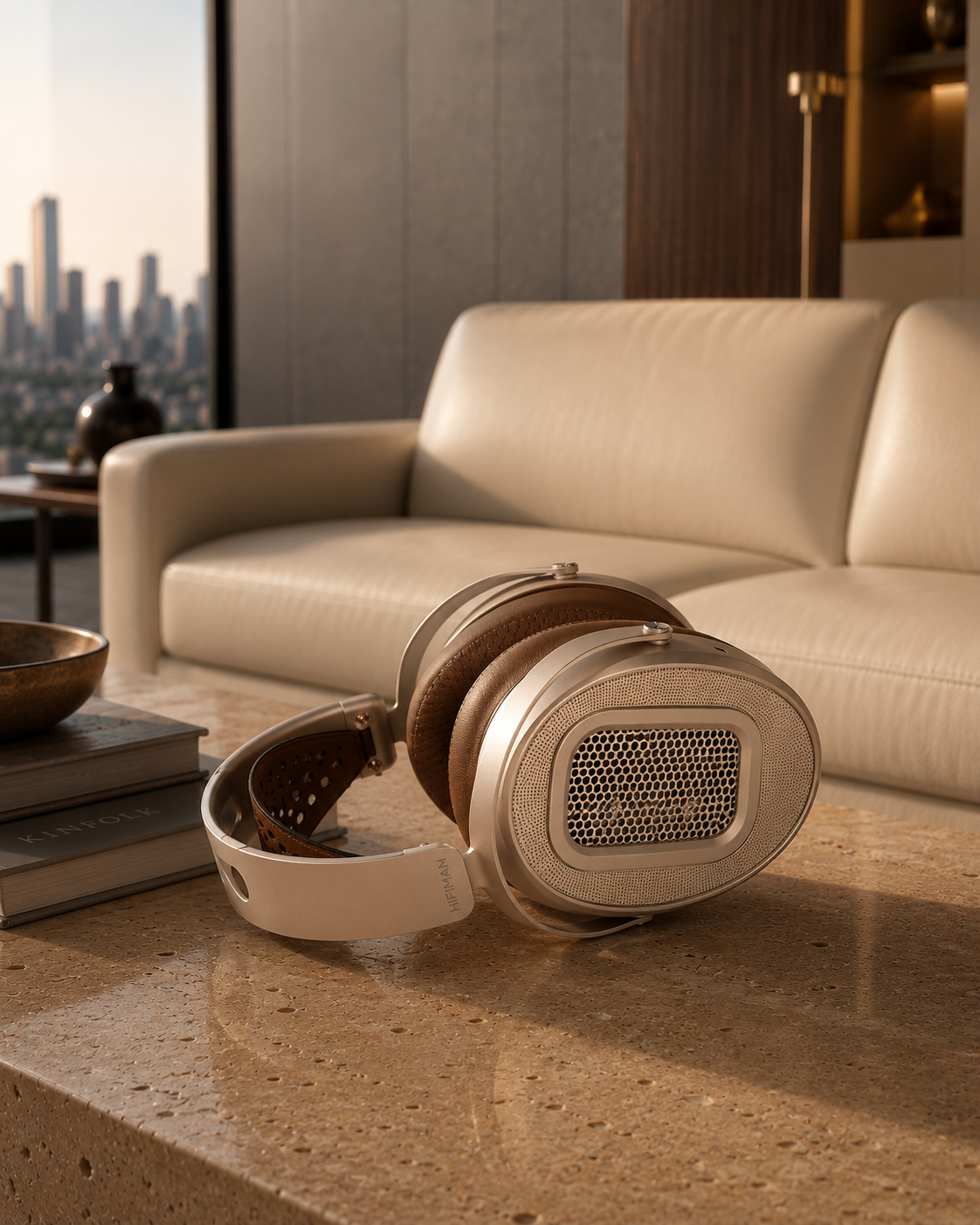
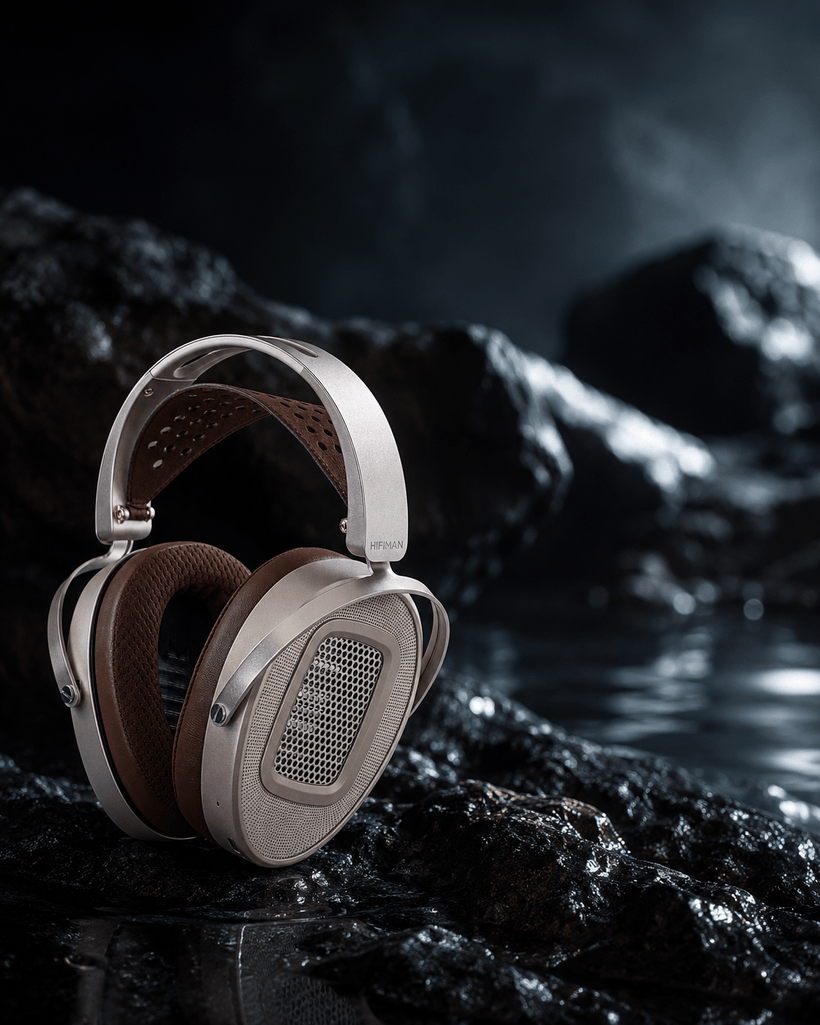
The finish is a little more complicated. Some buyers at this price might want something flashier. More polished metal. More visual drama. More opportunities for visitors to ask how much it cost. The HE1000 WiFi Headphone doesn’t really chase that. Over time I found myself appreciating the practicality.

It feels built to be used, not displayed.
The funny thing is that I probably spent more time listening to albums I already knew than hunting for recordings that would show the headphone at its best. That’s usually a sign. The gear-evaluation part of my brain tends to disappear when I’m genuinely enjoying something. Which probably gets to the heart of my experience with it. This is a product that made more sense after a few weeks than it did after six minutes. At first, the conversation revolves around technology. Wi-Fi transmission. Streaming architecture. DAC design. Amplification. Signal paths. All of those things matter. Then they fade into the background.
I’ve stayed up later than intended more than once because a listening session kept extending itself. Not because I was evaluating performance. Because I was listening. There’s a difference. Every audio product has strengths. Plenty make a strong first impression. Some are genuinely impressive in short demonstrations.
Far fewer remain appealing once the novelty wears off and they become part of a routine. The HE1000 WiFi Headphone has managed that, at least so far. Weeks later, I still keep reaching for it and suspect I will be reaching for it many years later.